KEURIG REVIEW • RESEARCH-BASED
As an Amazon Associate, BrewMender earns from qualifying purchases. Some links may earn a commission at no extra cost to you.
.
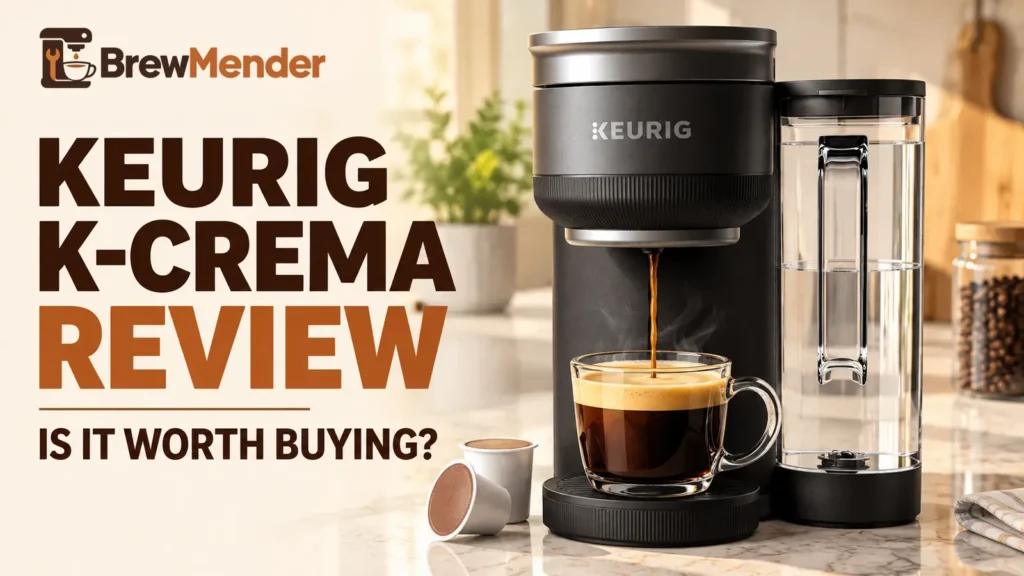
In this Keurig K-Crema review, the short answer is yes for one kind of buyer: someone who already drinks K-Cup coffee every day and wants a smoother, crema-topped cup or a quick espresso-style shot without learning an espresso machine. If you brew your own grounds, want true espresso, or mostly make lattes, another machine will suit you better. We have not tested the K-Crema ourselves. This review is built from Keurig’s K-Crema Use & Care Guide and product page, plus two independent hands-on reviews from Tom’s Guide and TechRadar. We note which source each point comes from. Our review methodology
This is a research-based review, not our own hands-on test. We used Keurig documentation and independent tests from Tom’s Guide and TechRadar. Our review methodology.
✦ OUR VERDICT
Keurig K-Crema Review: Our Verdict
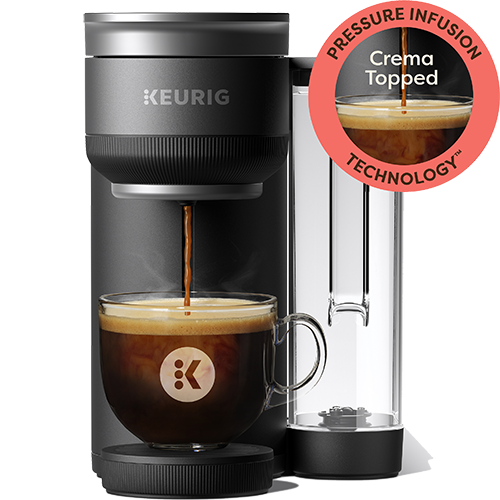
The K-Crema adds a Pressure button that standard Keurig brewers don’t have. It tops coffee with crema and brews 2 oz or 4 oz espresso-style shots from ordinary coffee K-Cup pods. Both independent testers liked the smoother cup and quick brewing. The limits are real, though: no reusable filters, thinner crema from lighter roasts, and shots that are espresso-style rather than true espresso.
- Brew modes: Classic and Pressure
- Sizes: 2 oz and 4 oz shots, plus 6, 8, 10 and 12 oz cups
- Reservoir: 72 oz, removable
- Pods: coffee K-Cup pods; no reusable filters
- Upkeep: descale every 3 months or when the Descale light comes on
Opens Amazon search results. Verify US model 5000380920 and current availability.
TL;DR: Should You Buy It?
- Buy it if you drink K-Cup coffee daily, mostly black or with a splash of milk, and want a smoother cup plus quick espresso-style shots.
- Skip it if you brew your own grounds in a reusable filter or want real espresso. Keurig says the K-Crema isn’t compatible with reusable filters.
- Biggest trade-off: crema depends on the pod. Keurig says dark roasts give the most, medium roasts a moderate amount, and light roasts a fine layer.
Pros and Cons
Source labels distinguish Keurig’s documentation from independent reviewers’ observations.
✓ Pros
- Two brew styles in one machine: Pressure makes crema-topped coffee and 2 or 4 oz shots, while Classic handles tea, cocoa, one-step lattes and refreshers. (Keurig)
- Smoother coffee on Pressure: TechRadar’s tester found Pressure brews smoother and richer than Classic, even with medium-roast pods. (Test)
- Quick brewing: Tom’s Guide timed a single shot at 41 seconds and an 8 oz Pressure brew at 1 minute 11 seconds. (Test)
- Large reservoir: Keurig lists a 72 oz removable tank, so you can brew several drinks between refills. (Keurig)
- Simple routine care: the removable parts hand-wash, a Descale light reminds you when it’s time, and the brewer turns itself off after 5 minutes. (Keurig)
− Cons
- No reusable filter: Keurig’s guide says the K-Crema isn’t compatible with reusable coffee filters or fiber and mesh pods. (Keurig)
- Crema depends on roast: TechRadar got only a thin layer from medium-roast pods, which matches Keurig’s own guidance. (Test, Keurig)
- Shots measured cooler than mugs in one test: Tom’s Guide recorded 163°F for a single shot and 168°F for a double, versus 170°F to 174°F for full cups. (Test)
- No milk frother: lattes and cappuccinos need a separate frother. (Keurig)
- Some splash-back: TechRadar regularly wiped coffee off the base above the drip tray. (Test)
How Close Is It to Real Espresso?
Close enough for a Keurig fan, not for an espresso lover. The K-Crema makes smoother coffee with real crema on Pressure, and its shots are quick and bold. But they come from the same K-Cup grounds as any Keurig brew, Keurig publishes no bar rating, and one reviewer said purists may not be satisfied. If you want true espresso ground from fresh beans, see our Ninja Luxe Café and Breville Barista Express comparison.
Classic vs. Pressure: What Changes
- Classic is Keurig’s standard brew. Keurig recommends it for tea, cocoa, one-step lattes and refreshers, in 6, 8, 10 or 12 oz.
- Pressure is for coffee pods. Keurig says it uses more than five times the pressure of a standard Keurig brewer and suggests it for a bolder cup. It’s the only mode that offers the 2 oz Shot and 4 oz Double Shot.
- In testing, TechRadar found both modes bold and flavorful, with Pressure noticeably smoother. Tom’s Guide found Pressure faster at every cup size it timed, such as 1 minute 36 seconds versus 2 minutes 8 seconds for 12 oz.
What Affects the Crema
- Roast: Keurig says dark roasts give the most crema, medium roasts a moderate amount and light roasts a fine layer. TechRadar’s medium-roast tests produced only a small amount.
- A clogged pod holder: Keurig lists this as a cause of missing crema (cleaning steps are under Upkeep).
- Milk and creamer: Keurig’s guide gives two different tips. One says to add creamer to the mug before a Pressure brew; another says to brew first and add creamer after. Tom’s Guide found the crema didn’t hold up once milk and sugar went in. Try both orders and keep what you like.
The Limits of Espresso-Style Shots
- No published pressure figure: Keurig compares the K-Crema only to its own brewers. Espresso machines often list a pump rating; the Nespresso Essenza Mini, for example, lists 19 bar. Without a K-Crema number, you can’t compare the two directly.
- Taste: Tom’s Guide called the coffee smooth and enjoyable but said the taste might not satisfy espresso purists.
- Temperature: Tom’s Guide measured its shots in the cup at 163°F (single) and 168°F (double) and found them a little cooler than expected. TechRadar didn’t publish readings but found its brews comfortable to drink right away. These are two reviewers’ units, not a lab standard.
Who It Fits
Find your situation in the first column. Fit ratings are our judgment, based on the specs and test results above.
| Your situation | Fit | Why |
|---|---|---|
| Daily K-Cup drinker, black or a splash of milk | Good fit | Uses the coffee K-Cups you already buy and adds crema plus two shot sizes. |
| You already own a working Keurig | Consider | Worth it only if you’ll use Pressure often; see the upgrade notes below. |
| You want traditional espresso | Poor fit | Shots are espresso-style, and Keurig publishes no pressure rating to compare with espresso machines. |
| You brew your own grounds in a reusable filter | Poor fit | Keurig says the K-Crema isn’t compatible with reusable filters. |
| Lattes or cappuccinos most days | Consider | No frother included. Plan on a separate frother, or see the K-Café Barista Bar below. |
Should You Upgrade From a Keurig You Already Own?
If your current Keurig works, upgrade only for the Pressure features. The K-Crema uses the same coffee K-Cup pods, so your pod habit doesn’t change. What you gain and what you might give up:
- You gain: Pressure brewing with crema, 2 oz and 4 oz espresso-style shots, and a 72 oz removable reservoir.
- You may give up: the K-Crema’s control panel has no Strong, iced, hot-water or temperature button, so check what your current model has before you switch. Tom’s Guide also lists no strength control.
- Reusable-filter users: if you brew your own grounds today, the K-Crema can’t do that. Keep your current brewer or choose one that accepts the My K-Cup Universal filter.
- Water filter users: the K-Crema supports an optional Keurig Water Filter, but Keurig doesn’t say which handle size it takes, so don’t assume your current handle will transfer.
A simple test: if you’d press Pressure for most of your cups, the upgrade may make sense. If you’d mostly use Classic, your current Keurig already does that job.
Is the higher cost worthwhile? The K-Crema’s price premium makes sense primarily if you’ll use Pressure brewing often. If you mostly want classic full-size K-Cup coffee, a less expensive Keurig can be a better value. For espresso-focused buyers, consider what an Original-capsule Nespresso machine offers before buying.
Key Specs
We list only details we could confirm. Where Keurig’s own sources disagree, we say so.
| Specification | Keurig K-Crema | Source |
|---|---|---|
| Brew modes | Classic and Pressure | Use & Care Guide |
| Pressure sizes | Shot (2 oz), Double Shot (4 oz), 6, 8, 10, 12 oz | Use & Care Guide |
| Classic sizes | 6, 8, 10, 12 oz | Use & Care Guide |
| Pods | Coffee K-Cups on Pressure; tea, cocoa, one-step latte and refresher pods on Classic | Use & Care Guide |
| Reusable filters | Not compatible; fiber and mesh pods also not compatible | Use & Care Guide |
| Pressure | More than 5x a standard Keurig brewer; no bar figure published | Use & Care Guide |
| Reservoir | 72 oz, removable | Keurig product page |
| Drip tray | Adjustable; remove it for travel mugs. Keurig’s guide and product copy give different numbers of height positions, so check your tallest mug | Use & Care Guide; Keurig product copy |
| Other controls | No Strong, iced, hot-water or temperature button | Use & Care Guide (control panel) |
| Water filter | Optional Keurig Water Filter, sold separately; handle size not stated | Use & Care Guide |
| Milk frother | None | Use & Care Guide |
| Auto-off | After 5 minutes | Use & Care Guide |
| Size (W x H x D) | About 8.5 x 13.3 x 13.1 in | Kohl’s listing; TechRadar |
| US model number | 5000380920 | Kohl’s listing |
| Warranty | 1-year limited, US and Canada | Use & Care Guide |
Keurig doesn’t list the brewer’s height with the handle raised. If it will sit under cabinets, ask Keurig about its open-handle clearance or check a display model before you buy. If counter width matters most, compare the narrower K-Mini models.
Upkeep, Cleaning and Parts
Here is what Keurig’s guide asks of K-Crema owners.
1. Routine Cleaning
- Wash the removable parts in warm, soapy water before first use and every so often after that. Keurig’s guide calls for hand-washing, and TechRadar notes the parts aren’t dishwasher safe.
- Wipe the inside of the reservoir with a damp, lint-free cloth and let it air-dry. Don’t towel it out, since lint can stay behind.
- Give the pod holder extra attention. Pull the funnel off, then rinse until water flows freely through both the top and bottom of the holder’s pressure arm. A damp cotton swab clears grounds stuck on top of the arm.
- Clear the entrance needles under the lid with a straightened paper clip, then run two cleansing brews without a pod.
Keurig warns that sharp needles sit above and inside the pod holder, so keep your fingers out of it. We also suggest letting the brewer cool before you clean near the brew head.
2. Descaling
Keurig says to descale every 3 months or whenever the Descale light comes on, and sooner if your water is high in minerals. The guide’s procedure uses Keurig Descaling Solution and a guided Descale Mode (hold the 8 oz and 12 oz buttons for 3 seconds with the brewer plugged in and powered off), followed by fresh-water rinse brews until the light shuts off. Plan on 15 to 20 minutes, remove any water filter first, and use a large ceramic mug, not a paper cup.
If a heavily scaled brewer gives little or no output and you hear air blowing after the descaler goes in, Keurig’s guide says to turn it off, unplug it, pour out the solution, rinse and refill the reservoir, then plug it back in and continue the fresh-water rinse. If that still doesn’t work, let it sit unplugged for at least 30 minutes before rinsing again. Don’t use distilled water; the guide rules it out.
For timing across models, see how descaling schedules differ by model. Shopping for solution? Read our comparison of Keurig descalers first. If the light stays on after you finish, start with our guide to a descale light that won’t turn off.
3. Replaceable Parts and Consumables
- Water filter: optional. The guide supports a Keurig Water Filter but doesn’t say whether the K-Crema takes the tall or short filter handle. Confirm with Keurig before ordering; our Keurig water filter fit guide explains the two handle types.
- Pod holder: the K-Crema’s holder has a pressure arm and a separate funnel. We didn’t find a Keurig listing for a K-Crema replacement holder, so don’t assume a holder from another model will fit. Our guide to checking pod holder fit before you buy explains what to compare.
- Reusable pods sold as “K-Crema compatible”: some reviews and sellers suggest them, but Keurig’s guide says the brewer isn’t compatible with reusable filters, and its warranty may not cover damage caused by non-Keurig pods or accessories.
- Everything else: Keurig says the brewer isn’t user serviceable beyond cleaning and maintenance. Warranty service starts with a call to Keurig at 1-866-901-2739.
Ongoing Cost Considerations
| Item | How often | Per year | What it is |
|---|---|---|---|
| Coffee pods | One per brew cycle | Depends on your habit | Everyday cost |
| Keurig Descaling Solution | Every 3 months or when the light comes on | About 4 bottles at the three-month interval; possibly more if the alert appears sooner | Maintenance Keurig calls for |
| Keurig Rinse Pods | Weekly | Up to 52 | Recommended for flavor carryover, not needed to brew |
| Water filter cartridges | Every 2 months | 6, only if you install a filter | Optional |
Each brew cycle uses one pod. A 4 oz Double Shot is a single brew cycle, so it uses one pod, the same as a 12 oz mug. Two separately brewed drinks use two pods. We left out dollar figures because prices change often; multiply these counts by current prices for your own estimate.
Known Issues and Fixes
These come from Keurig’s troubleshooting guide unless marked otherwise. We found no reliable data on how often any of them happen, and most owner reviews we saw were collected through retailer promotions, so this table doesn’t rank them.
| Symptom | What the Evidence Shows | Safest Next Step |
|---|---|---|
| Little or no crema | Keurig: roast matters, and a clogged pod holder can reduce crema. TechRadar saw only a thin layer with a medium roast. | Try a dark-roast coffee pod on Pressure; clean the pod holder and pressure arm. |
| Chose Pressure, got a Classic brew | Keurig: Pressure is designed for coffee and isn’t compatible with fiber or mesh pods; the pod holder may also need cleaning. | Use a standard coffee K-Cup pod and clean the pod holder. |
| Handle stays locked after a Pressure brew | Keurig: the pressure lock engages during a Pressure brew and releases once the brew is complete and the BREW button is no longer lit. | Wait until the BREW button goes dark. Don’t force or pry the handle. If it’s still locked with the BREW light off, call Keurig at 1-866-901-2739. |
| Handle lifts during a Pressure brew | Keurig: the lock should engage automatically during every Pressure brew, and the guide says not to open the handle until the brew is complete. TechRadar’s unit didn’t lock, which it suspected was specific to that unit. | Don’t lift the handle mid-brew; to stop a brew, press and hold the BREW button. Contact Keurig before you keep using Pressure mode. |
| Partial cup | Keurig: a clogged pod holder, a reservoir lifted mid-brew, or scale. | Work through our short-cup troubleshooting steps. Keurig says to call if it’s still short after two rounds of cleaning. |
| Coffee grounds in the cup | Keurig: the brewer needs cleaning. | Run a rinse brew without a pod, then clean the pod holder. |
| Little or no water after adding descaler | Keurig: this can happen with heavy scale. | Follow the recovery steps under Descaling. If water still won’t move, see our no-flow checks. |
| All brew size lights blink at once | Keurig: contact Customer Service. | Call Keurig at 1-866-901-2739. Don’t open the brewer. |
Stop using the brewer and contact Keurig if you see smoke or sparks, smell burning, notice a damaged cord, or find water leaking near the power connection. Don’t open the housing or try to defeat the pressure lock.
Alternatives Worth a Look
Each alternative changes one important buying decision: milk frothing, espresso capsules or reusable coffee filters. If you want to compare K-Cup brewing with Ninja models that also use ground coffee, read our Ninja vs Keurig guide.
01 / For milk drinks
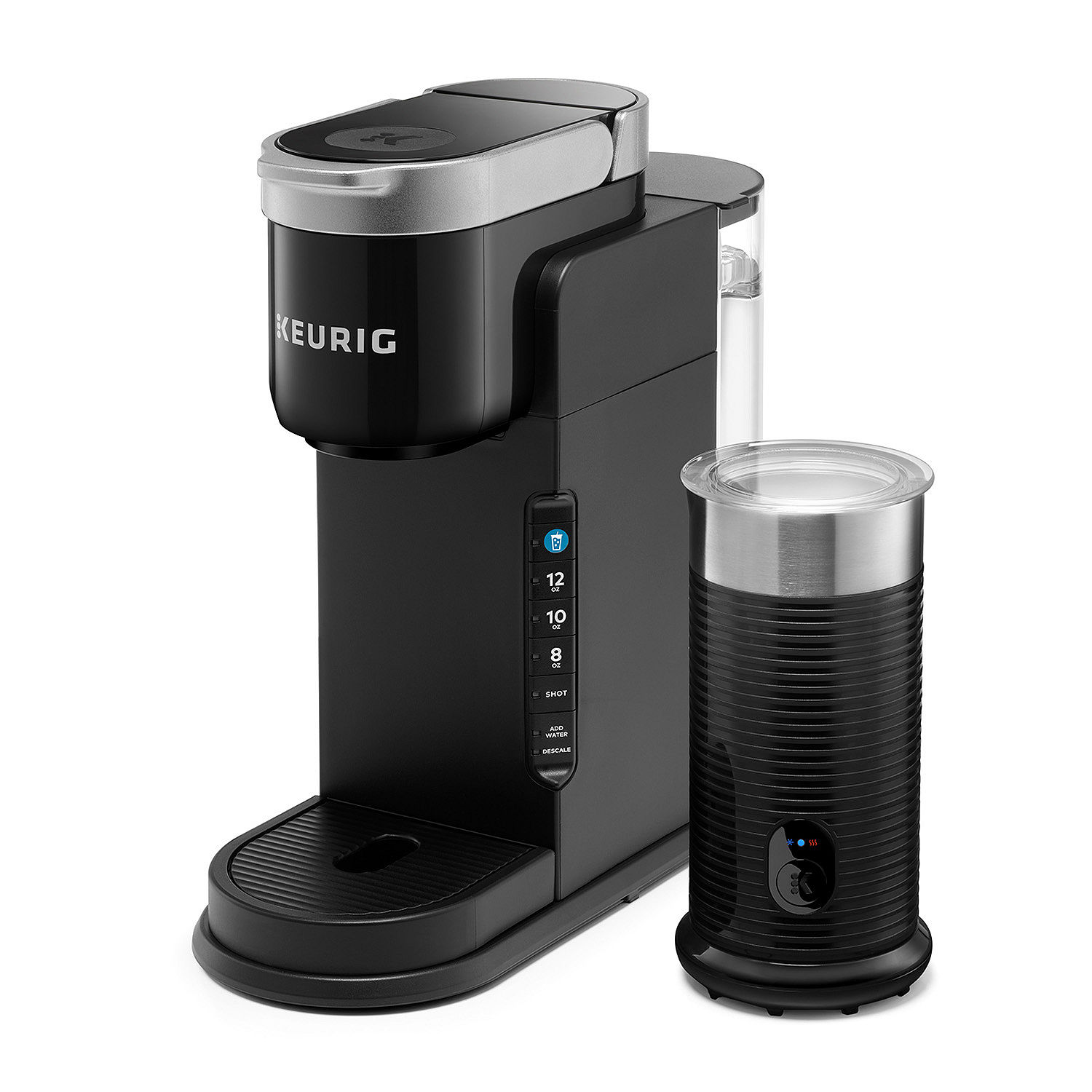
Keurig K-Café Barista Bar
Standard K-Cup brewing with a separate included hot/cold milk frother and a 2 oz coffee shot. No PressureInfusion mode. Better for frequent lattes.
Amazon search results, not a verified single product listing. Check the model before purchase.
02 / For true espresso-style capsule brewing
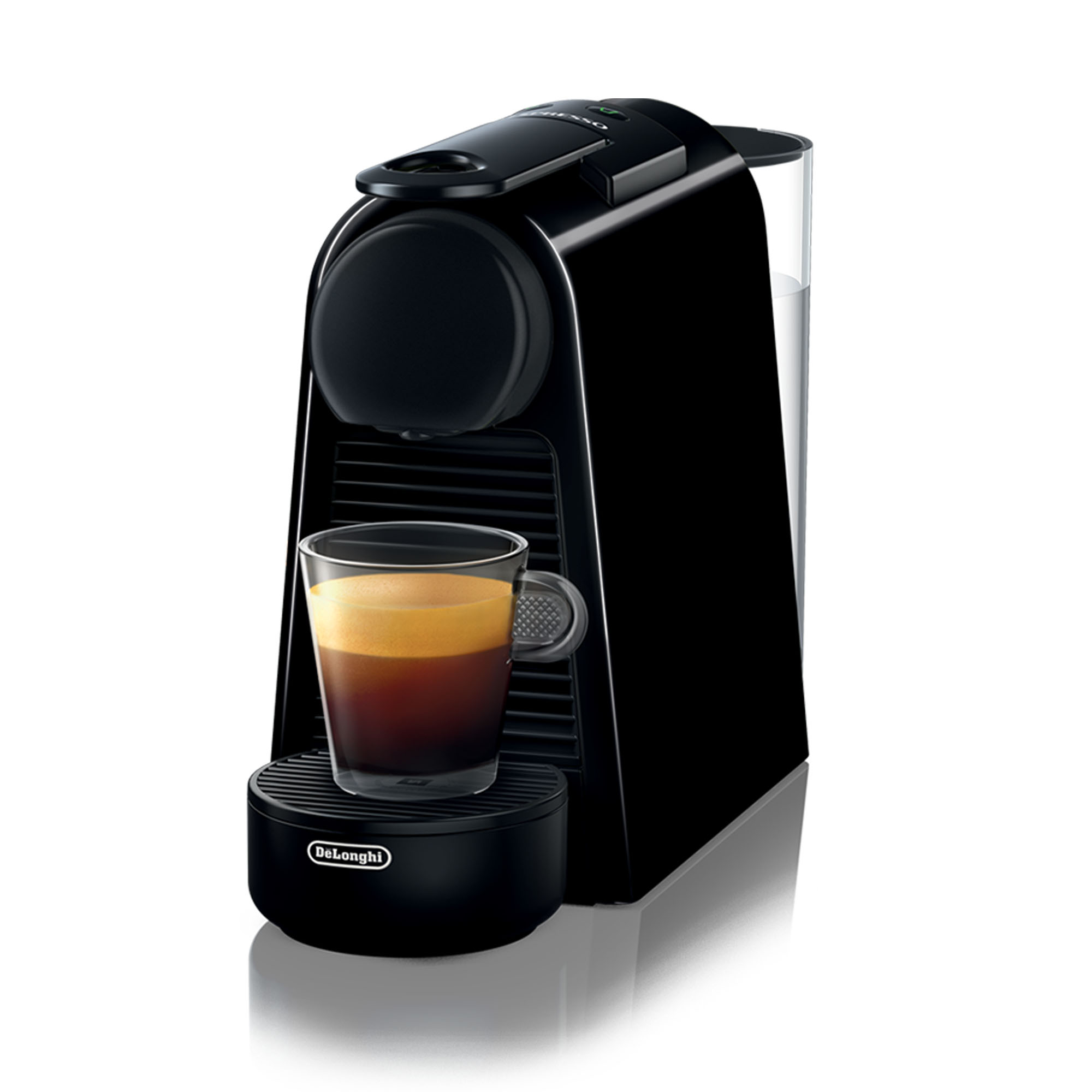
Nespresso Essenza Mini
A compact 19-bar Nespresso Original machine for espresso and lungo, not regular K-Cups. No milk system is included.
Amazon search results, not a verified single product listing. Check the model before purchase.
03 / For classic full-cup coffee
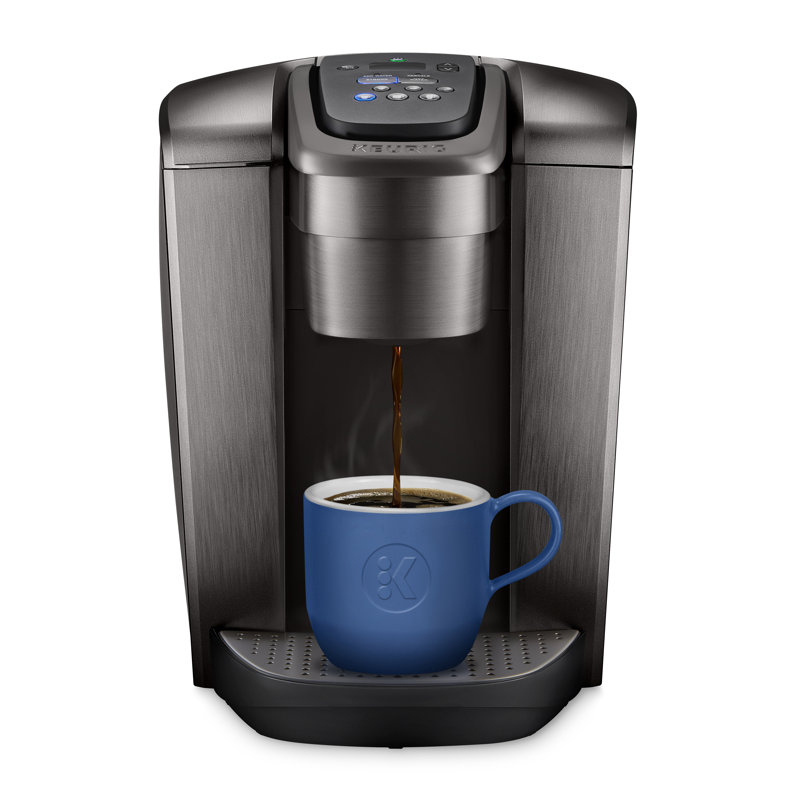
Keurig K-Elite
Adds Strong, iced, hot-water and temperature controls. It supports the My K-Cup reusable filter but does not offer Pressure brewing. If iced coffee is a priority, our iced coffee K-Cup buying guide helps you choose pods to brew over ice.
Amazon search results, not a verified single product listing. Check the model before purchase.
Product image credits: JCPenney / Keurig, Nespresso, Wayfair / Keurig.
Detailed alternative specifications
Keurig K-Café Barista Bar
- Brewing: standard Keurig brewing plus a 2 oz coffee shot; Keurig’s feature list includes no pressure mode.
- Pods: any K-Cup pod, and Keurig lists it as compatible with the My K-Cup Universal reusable filter.
- Milk: includes a separate freestanding electric frother for hot and cold milk.
- Best for: latte and cappuccino drinkers who don’t need crema. The trade-off is a smaller 42 oz reservoir.
Nespresso Essenza Mini (by De’Longhi, EN85B)
- Brewing: espresso from a 19-bar pump, with programmable espresso (40 ml, about 1.4 oz) and lungo (110 ml, about 3.7 oz) buttons.
- Pods: Nespresso Original capsules, not K-Cups.
- Milk: none built in; De’Longhi lists no milk system on this model.
- Best for: espresso drinkers short on counter space. The trade-off is a small 20.29 oz water tank and a different pod system.
Keurig K-Elite
- Brewing: standard Keurig brewing with a Strong button, iced setting, hot water and temperature control from 187°F to 192°F; no pressure mode.
- Pods: K-Cup pods, and Keurig lists it as compatible with the My K-Cup Universal reusable filter.
- Milk: none built in.
- Best for: people who mostly brew full mugs and want strength and temperature control, or their own grounds, more than crema.
The Bottom Line
Buy the K-Crema if you’re a committed K-Cup drinker who takes coffee black or close to it and would use the Pressure button for most cups. Skip it if you rely on a reusable filter, want true espresso, or make milk drinks every morning. If you already own a working Keurig, the upgrade only pays off when you’d use Pressure daily. The main trade-off is flexibility: you gain crema and quick shots, but you’re limited to single-use pods, and the crema depends on the roast you buy.
Sources
- Keurig K-Crema Single Serve Coffee Maker Use & Care Guide (PDF), Keurig, accessed October 27, 2026
- K-Crema High Pressure Coffee Maker product page, Keurig, accessed October 27, 2026
- Keurig K-Crema hands-on review, Tom’s Guide (Catherine Hiles), published August 12, 2026
- Keurig K-Crema hands-on review, TechRadar (Vic Hood), published May 19, 2026
- Keurig K-Crema product listing with Keurig’s description, model 5000380920, Kohl’s, accessed October 27, 2026
- Keurig K-Café Barista Bar product listing (Kohl’s) and reusable filter compatibility note (Fry’s Food Stores), accessed October 27, 2026
- Nespresso Essenza Mini EN85B product page, De’Longhi US, accessed October 27, 2026
- Keurig K-Elite Use & Care Guide (PDF), Keurig, accessed October 27, 2026
- Keurig My K-Cup Universal Reusable Filter compatibility list, Fry’s Food Stores listing, accessed October 27, 2026